Macular Degeneration: The Disease You Don’t Feel — Until You Do

- posted: Feb. 24, 2026
Most people assume vision loss means darkness.
Macular degeneration is different.
You can still walk around a room and see objects around you — yet struggle to read a text message or recognize a familiar face. That’s because this condition affects the macula, the small central portion of the retina responsible for detailed vision.
It is the leading cause of permanent vision impairment after age 50, and it often develops without noticeable symptoms in the early stages.
What Is Macular Degeneration?
Age-related macular degeneration (AMD) is a progressive condition in which the central retinal cells slowly lose function. Peripheral vision remains, but clarity fades over time.
Patients commonly report:
- Missing letters while reading
- Blurred faces
- Bent or wavy lines
- Increased glare
- Difficulty driving at night
The challenge is simple: by the time you notice it, damage has already begun.
The Two Types of AMD
Dry Macular Degeneration
The most common form. The retinal support cells gradually deteriorate.
In advanced stages it can progress to Geographic Atrophy, where areas of the retina stop functioning completely.
Wet Macular Degeneration
Less common but more aggressive. Abnormal blood vessels grow under the retina and leak fluid. This form requires urgent treatment to preserve vision.
A New Era: Treatment for Geographic Atrophy
For years, advanced dry macular degeneration had no treatment.
Today, FDA-approved therapies exist that can slow the progression of geographic atrophy by protecting remaining retinal cells.
They do not restore lost vision — but they help preserve the vision you still have.
This makes early diagnosis critically important.
Why Early Detection Matters
Macular degeneration begins years before symptoms appear.
With modern retinal imaging (OCT scans), we can detect early structural changes long before a patient notices visual decline. Identifying the disease early allows us to:
- Monitor progression closely
- Recommend protective nutrition
- Guide lifestyle modifications
- Initiate treatment at the appropriate time
The earlier we see it, the more vision we can protect.
How to Reduce Risk and Slow Progression
While age and genetics cannot be changed, daily habits influence disease speed.
Helpful protective measures include:
- Stop smoking
- Control blood pressure and cholesterol
- Eat leafy green vegetables
- Increase omega-3 intake
- Wear UV-protective sunglasses
- Use AREDS2 vitamins when recommended
- Maintain routine retinal screenings
Small preventative steps make a measurable difference over time.
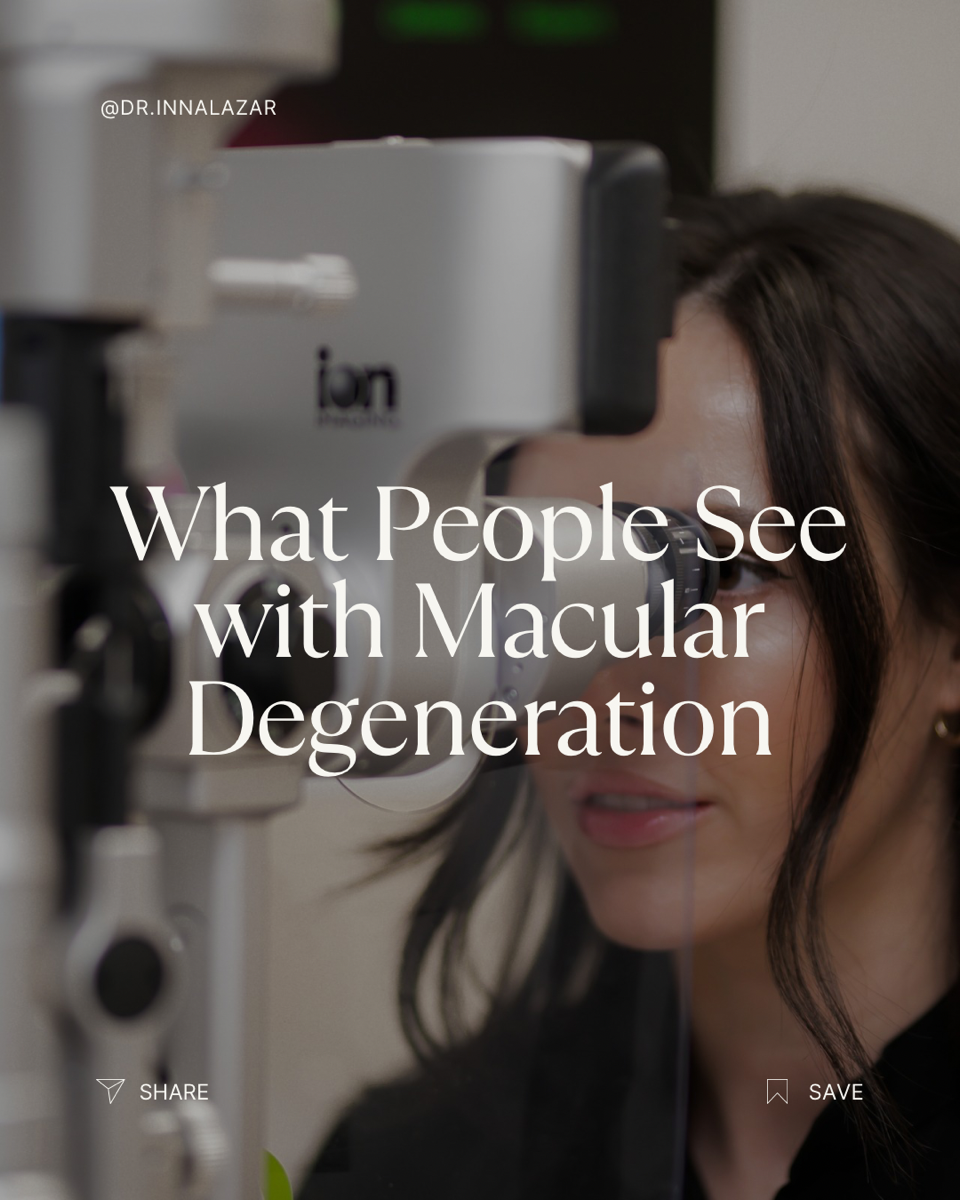
See What Patients Actually See
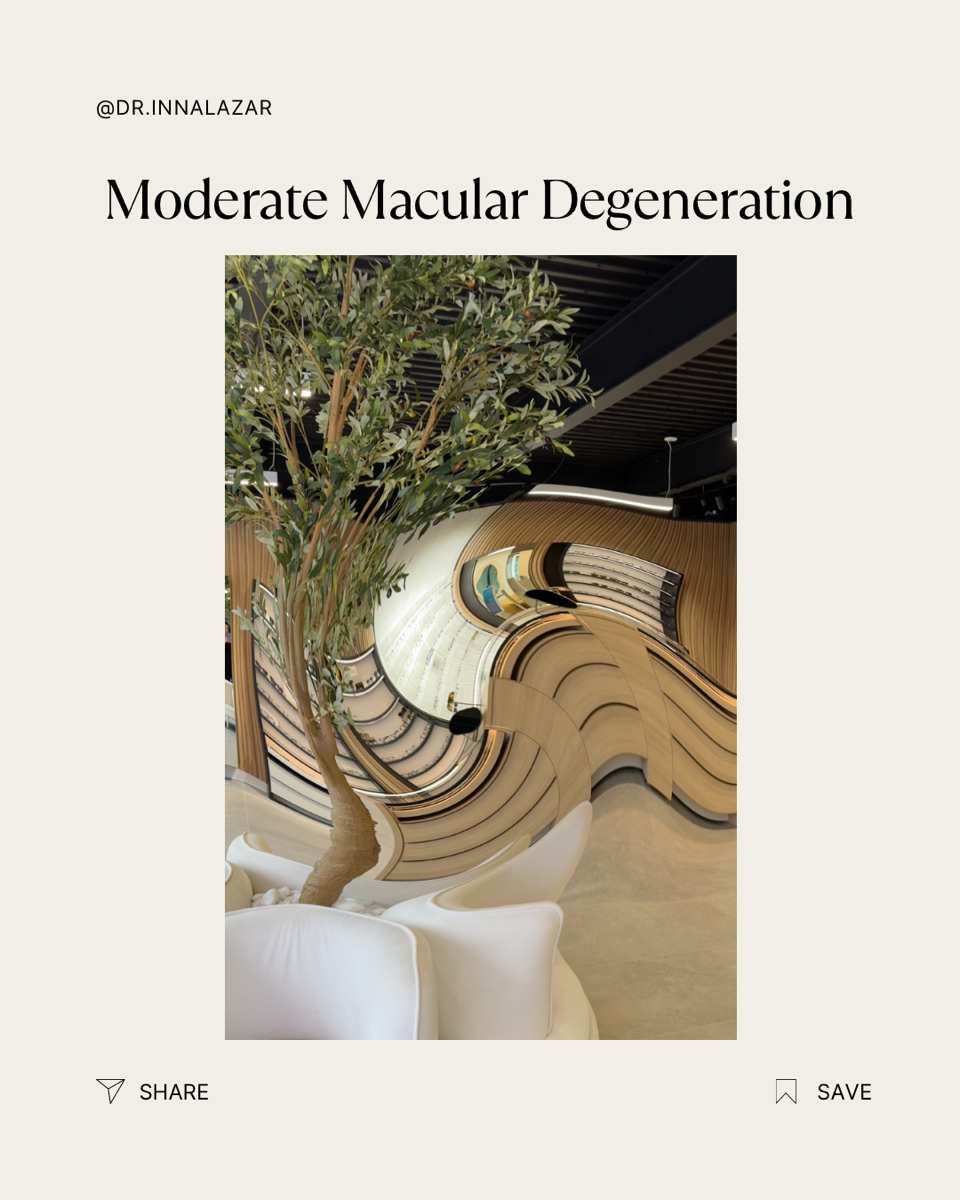
Many people are surprised that macular degeneration does not look like darkness — it looks like missing detail.
We have included real visual simulations so you can understand how vision changes as the condition progresses.
Take a moment to review the images below — they explain why early detection matters more than symptoms.
 |
 |
 |
 |
 |
 |
 |
 |
When Should You Schedule an Eye Exam?
You should have a retinal evaluation if you:
- Are over age 50
- Have a family history of macular degeneration
- Notice distortion or blur while reading
- Have cardiovascular risk factors
- Have not had retinal imaging in the past year
Protect Your Future Vision
Macular degeneration is manageable when detected early and much harder to treat late.
Schedule your comprehensive eye exam today and review the images above to understand how this condition affects vision.
Early detection preserves independence, reading ability, and quality of life — and it starts with a routine visit.
- posted: Feb. 24, 2026
Most people assume vision loss means darkness.
Macular degeneration is different.
You can still walk around a room and see objects around you — yet struggle to read a text message or recognize a familiar face. That’s because this condition affects the macula, the small central portion of the retina responsible for detailed vision.
It is the leading cause of permanent vision impairment after age 50, and it often develops without noticeable symptoms in the early stages.
What Is Macular Degeneration?
Age-related macular degeneration (AMD) is a progressive condition in which the central retinal cells slowly lose function. Peripheral vision remains, but clarity fades over time.
Patients commonly report:
- Missing letters while reading
- Blurred faces
- Bent or wavy lines
- Increased glare
- Difficulty driving at night
The challenge is simple: by the time you notice it, damage has already begun.
The Two Types of AMD
Dry Macular Degeneration
The most common form. The retinal support cells gradually deteriorate.
In advanced stages it can progress to Geographic Atrophy, where areas of the retina stop functioning completely.
Wet Macular Degeneration
Less common but more aggressive. Abnormal blood vessels grow under the retina and leak fluid. This form requires urgent treatment to preserve vision.
A New Era: Treatment for Geographic Atrophy
For years, advanced dry macular degeneration had no treatment.
Today, FDA-approved therapies exist that can slow the progression of geographic atrophy by protecting remaining retinal cells.
They do not restore lost vision — but they help preserve the vision you still have.
This makes early diagnosis critically important.
Why Early Detection Matters
Macular degeneration begins years before symptoms appear.
With modern retinal imaging (OCT scans), we can detect early structural changes long before a patient notices visual decline. Identifying the disease early allows us to:
- Monitor progression closely
- Recommend protective nutrition
- Guide lifestyle modifications
- Initiate treatment at the appropriate time
The earlier we see it, the more vision we can protect.
How to Reduce Risk and Slow Progression
While age and genetics cannot be changed, daily habits influence disease speed.
Helpful protective measures include:
- Stop smoking
- Control blood pressure and cholesterol
- Eat leafy green vegetables
- Increase omega-3 intake
- Wear UV-protective sunglasses
- Use AREDS2 vitamins when recommended
- Maintain routine retinal screenings
Small preventative steps make a measurable difference over time.
See What Patients Actually See
Many people are surprised that macular degeneration does not look like darkness — it looks like missing detail.
We have included real visual simulations so you can understand how vision changes as the condition progresses.
Take a moment to review the images below — they explain why early detection matters more than symptoms.
|
|
|
|
|
|
|
|
When Should You Schedule an Eye Exam?
You should have a retinal evaluation if you:
- Are over age 50
- Have a family history of macular degeneration
- Notice distortion or blur while reading
- Have cardiovascular risk factors
- Have not had retinal imaging in the past year
Protect Your Future Vision
Macular degeneration is manageable when detected early and much harder to treat late.
Schedule your comprehensive eye exam today and review the images above to understand how this condition affects vision.
Early detection preserves independence, reading ability, and quality of life — and it starts with a routine visit.
Visit our Office
36 Old Kings Hwy S #110
Darien, CT 06820
Hours of Operation
Early or Late Appointments Available by Request
Greenwich
Monday
10:00 am - 6:00 pm
Tuesday
9:00 am - 5:00 pm
Wednesday
9:00 am - 5:00 pm
Thursday
9:00 am - 5:00 pm
Friday
9:00 am - 5:00 pm
Saturday
Closed
Sunday
Closed
Darien
Monday
9:00 am - 5:00 pm
Tuesday
9:00 am - 6:00 pm
Wednesday
9:00 am - 5:00 pm
Thursday
9:00 am - 6:00 pm
Friday
9:00 am - 5:00 pm
Saturday
Open once a month
Sunday
Closed
